
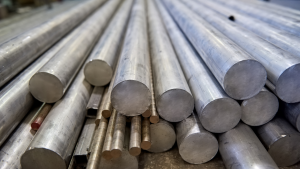
In the beginning of 2025 the European Commission’s Joint Research Centre (JRC) has issued a new report, “Closing the loop on the EU’s titanium supply chain”, setting an ambitious course for Europe’s titanium future.
The document highlights the EU’s heavy dependence on imported titanium and outlines a path toward a more resilient, circular, and sustainable supply chain — one that keeps strategic metals within Europe’s borders.
Titanium is essential to Europe’s aerospace and defence sectors, but also to industries driving the green and digital transitions — from energy generation to robotics, medical devices, and 3D printing. Yet, Europe remains largely reliant on external suppliers. The JRC’s message is clear: the EU must take tangible steps to strengthen its open strategic autonomy and “close the loop” on titanium use.
From Dependency to Resilience
Europe’s titanium industry in 2025 looks very different from a year ago. The disruptions of 2024 prompted producers and distributors to rethink their supply chains — requalifying suppliers, redirecting sourcing, and building a more selective, resilient network. For decades, global titanium supply was concentrated in a few countries — Russia, China, Japan, and Kazakhstan. Recent geopolitical shifts have forced Europe to adapt quickly, replacing lost capacity while facing ongoing risks of disruption.
According to the JRC, the EU still imports around six times more titanium than it exports. New frameworks like the Critical Raw Materials Act and Green Deal Industrial Plan aim to change that by boosting local production, recycling, and circular use of strategic metals.
For companies such as Hermith, the transition has brought both challenges and opportunity — stricter certification and traceability requirements, but also a stronger, more agile European titanium ecosystem, better prepared for the future.
A New Industrial Dynamic
As a result, the European titanium landscape is gradually transforming from one of dependency to one of resilience. Sustainability now goes beyond environmental responsibility; it has become a matter of industrial security. Supporting European stockists, processors, and manufacturers — those who invest locally, employ local expertise, and maintain European standards — is now central to the EU’s broader strategy for autonomy.
Today, circularity is not just an environmental goal — it’s an economic and strategic necessity. Supporting European stockists, processors, and manufacturers is essential to keep value creation, jobs, and innovation inside the EU and to secure a reliable titanium supply for aerospace, defence, and energy applications.
Hermith: Delivering Titanium for Europe’s New Reality
One of the companies already aligned with this shift is Hermith GmbH, headquartered in Munich, Germany. For more than a decade, Hermith has specialized in supplying titanium materials for aerospace, medical, industrial and many other applications — all manufactured to EN9100, EN9120, and ISO 9001 standards.
With a production and distribution capacity exceeding 1000 tonnes per year, Hermith serves clients across Europe from its hubs in Germany, Ireland, Turkey and India. The company’s expanding footprint reflects a broader strategy: shorten supply chains, strengthen regional presence, and ensure reliability in a volatile market.
Hermith is also investing in innovation — particularly in titanium wire for additive manufacturing, where improved purity and consistency are essential for high-performance 3D printing. This focus on material science and process control directly supports the EU’s goals of cleaner, more circular production.
Hermith’s approach aligns closely with the EU’s titanium strategy:
- European production and certification ensure supply chain security.
- Broad product portfolio covers everything from bars and sheets to billets and tubes.
- Commitment to innovation and recycling supports circularity.
- Strategic presence across key European regions ensures flexibility and timely delivery.
As the JRC concluded, “By advancing circularity, reshoring production, and fostering partnerships, the EU can secure a sustainable titanium ecosystem.” Hermith stands ready to be part of that transformation — providing the materials, expertise, and capacity Europe needs to achieve it.
Looking Ahead
Industry analysts expect titanium demand in Europe to accelerate over the next five years, driven by both civilian and defence programs. At the same time, EU policy will increasingly favour suppliers that can demonstrate local sourcing, sustainability, and circularity. This convergence of policy and industry priorities is reshaping the competitive landscape — rewarding companies that combine reliability, innovation, and regional presence.
To read a full article from EC: https://joint-research-centre.ec.europa.eu/jrc-news-and-updates/closing-loop-eus-titanium-supply-chain-2025-01-23_en